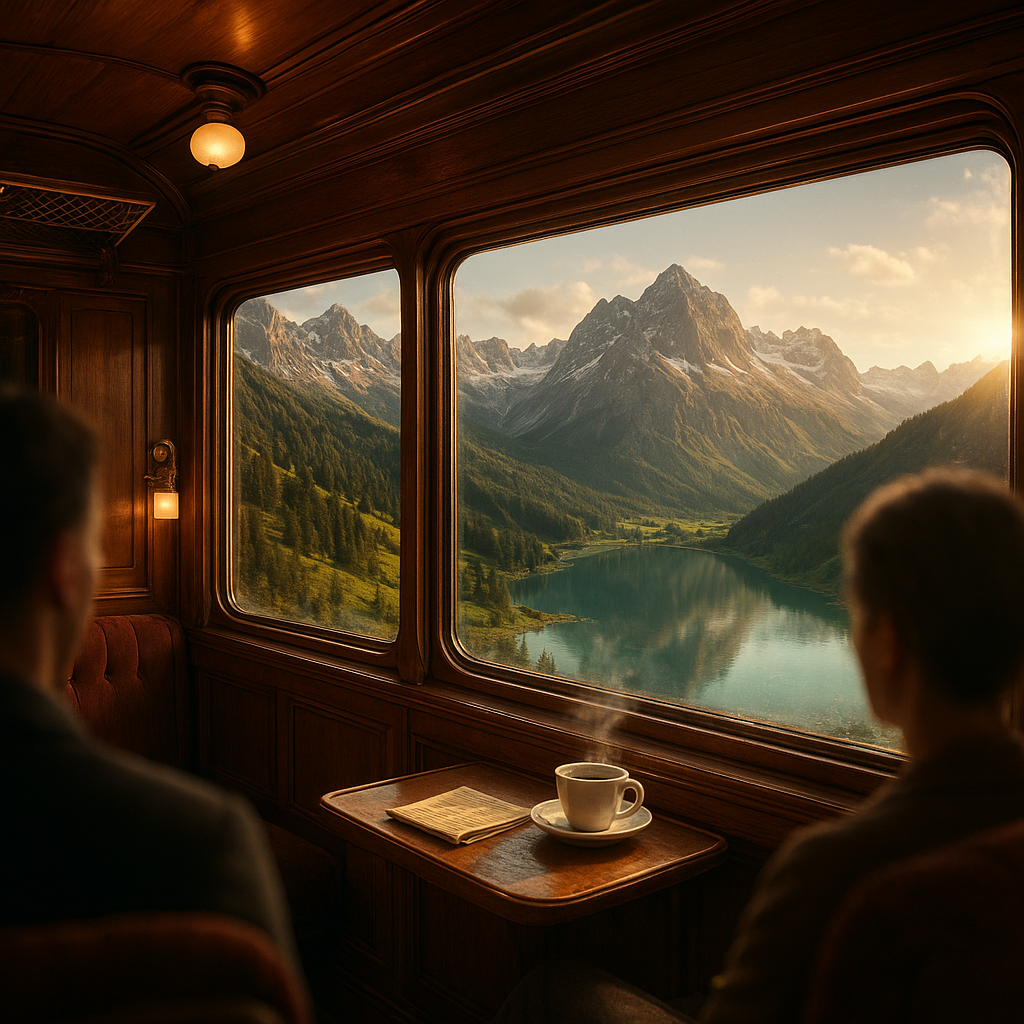
There’s something undeniably romantic about watching the European countryside blur past a train window — snow-capped Alps giving way to sun-drenched vineyards, dramatic fjords appearing around every bend, ancient viaducts stretching across valleys that look like they belong in a painting. Train travel in Europe isn’t just a means of getting from A to B; on the right routes, it’s the entire point of the journey.
Europe boasts one of the world’s most extensive and sophisticated rail networks, with over 240,000 kilometres of track connecting everything from major capitals to remote mountain villages. But not all routes are created equal. Some are purely functional commuter lines, while others are genuine bucket-list experiences that photographers, adventurers, and slow travellers return to again and again. This guide cuts through the noise and focuses on the routes that genuinely take your breath away.
Why Train Travel in Europe Is Worth Your Time
Before diving into specific routes, it’s worth addressing something that comes up constantly among travellers: is the train really better than flying? For scenic journeys, absolutely — and not just for the views. You arrive at city-centre stations rather than airports 45 minutes outside town. You don’t deal with baggage restrictions, security queues, or the environmental guilt of a short-haul flight. And crucially, you actually see Europe rather than flying over it at 35,000 feet.
A Eurail pass can be a brilliant investment if you’re planning multiple journeys, particularly across Switzerland, Austria, and Italy. However, for individual iconic routes — especially the Glacier Express — booking specific seats well in advance is strongly recommended, as panoramic car seats sell out months ahead during peak summer season.
The Glacier Express, Switzerland
If you ask most seasoned European travellers what the most beautiful train trip in Europe is, the Glacier Express tends to dominate the conversation. Running between Zermatt and St. Moritz (or Davos), this eight-hour journey through the Swiss Alps is frequently described as the world’s slowest express train — a title it wears with considerable pride.
The route crosses 291 bridges, passes through 91 tunnels, and reaches its highest point at the Oberalp Pass at 2,033 metres above sea level. The panoramic carriages with their oversized windows are specifically designed to showcase the landscape, and the dining car serves a surprisingly excellent three-course lunch as the Rhône Valley unfolds outside. Visit between December and March for a winter wonderland aesthetic, or in July when alpine meadows are in full bloom.
Practical Tips for the Glacier Express
- Book early: Panoramic seats on this route sell out months in advance, particularly in summer and over Christmas
- Direction matters: Travelling from Zermatt to St. Moritz means you’ll have better views of the Landwasser Viaduct on the left-hand side
- Reservation fee: A seat reservation is mandatory and costs extra on top of any rail pass — factor this into your budget
- Half the route: If eight hours feels excessive, you can board at Andermatt for a shorter but still spectacular segment
The Bernina Express, Switzerland and Italy
Another Swiss masterpiece, the Bernina Express runs between Chur or Davos in Switzerland down to Tirano in northern Italy, crossing the Alps at the Bernina Pass — the highest railway crossing in the Alps at 2,253 metres. This route is a UNESCO World Heritage Site, and once you’ve travelled it, you’ll understand exactly why.
The engineering alone is staggering: the famous Brusio spiral viaduct sees the train cork-screw around a circular stone bridge, a solution devised to manage the steep descent without ruining the landscape. On clear days, you’ll see glaciers, frozen lakes, and the kind of dramatic mountain scenery that makes you instinctively reach for your camera every few minutes. The contrast between the icy Alpine summit and the palm trees of Tirano at the Italian end of the journey is genuinely surreal.
The Flåm Railway, Norway
Norway makes a compelling case for having the most dramatic train journey per kilometre anywhere on earth. The Flåmsbana (Flåm Railway) covers just 20 kilometres, but that short stretch descends 863 metres from the mountain plateau of Myrdal down to the fjord village of Flåm — making it one of the steepest standard-gauge railway lines in the world.
The journey takes roughly an hour each way and passes through 20 tunnels, one of which spirals completely inside a mountain. The train pauses at Kjosfossen waterfall, where passengers can step out onto the platform and stand in the mist. In autumn, the valley is ablaze with red and gold foliage; in winter, it looks like an illustration from a Nordic fairy tale. The Flåm Railway connects with fjord cruises and the Bergen Railway, making it easy to incorporate into a wider Norwegian adventure.
The Cinque Terre Coastal Line, Italy
Not every stunning train route requires Alpine altitudes. The short but utterly charming coastal railway connecting the five villages of the Cinque Terre — Monterosso, Vernazza, Corniglia, Manarola, and Riomaggiore — offers something entirely different: flashes of turquoise Mediterranean Sea between tunnels carved through dramatic cliffsides, with glimpses of pastel-coloured houses clinging to the terraced hillsides above.
The individual segments between villages take just a few minutes each, which is partly what makes the Cinque Terre so wonderfully explorable by train. You can hop on and off all day with a regional pass, combining short hikes along the coastal trails with train journeys between villages when your legs need a rest. It’s relaxed, beautiful, and distinctly Italian in the best possible way.
The Transalpine Route: Salzburg to Trieste, Austria and Slovenia
Less famous than the Swiss giants but beloved by those in the know, the route from Salzburg through the Austrian Alps and into Slovenia via Villach offers some of central Europe’s most underappreciated railway scenery. The Karawanken tunnel crosses the border between Austria and Slovenia, emerging into a landscape that feels markedly different — greener, wilder, and considerably less crowded with tourists.
Ljubljana, Slovenia’s compact and charming capital, makes an excellent midpoint stop before continuing south towards the Adriatic coast. The stretch from Ljubljana to the coast passes through the karst landscape of the Slovenian interior — think deep gorges, limestone formations, and dense forest. It’s the kind of route that rewards travellers willing to do a little research rather than following the beaten path.
The West Highland Line, Scotland
Voted the world’s greatest railway journey by readers of Wanderlust magazine on multiple occasions, the West Highland Line from Glasgow to Mallaig winds through some of Scotland’s most dramatic and remote scenery. The route passes Loch Lomond, climbs through Rannoch Moor — one of the last great wildernesses in Western Europe — and crosses the iconic Glenfinnan Viaduct, which Harry Potter fans will recognise immediately as the bridge crossed by the Hogwarts Express.
The final stretch from Fort William to Mallaig is particularly breathtaking, offering views over sea lochs, white sand beaches, and the islands of Skye, Eigg, and Rum. The Jacobite steam train runs this section during summer months, making it genuinely one of the most atmospheric rail journeys in the world. Book well ahead — this one is enormously popular.

Overnight Train Journeys Worth Considering
Night trains are having a genuine renaissance across Europe, with new routes launching regularly as travellers increasingly choose lower-carbon options for longer journeys. If you’re looking for the best overnight train journeys in Europe, a few stand out:
- Vienna to Paris (Nightjet): Austrian Federal Railways’ Nightjet service connects major cities overnight with comfortable sleeper cabins — you go to sleep in one country and wake up in another
- Amsterdam to Zurich: A scenic daytime journey in summer becomes an atmospheric overnight option that saves on a hotel night
- Stockholm to Hamburg: Scandinavia to central Europe in a sleeper cabin, crossing into the continent as dawn breaks
Night trains won’t give you the views of the Glacier Express, but they offer something equally valuable: the sense of genuine adventure, the practical saving on accommodation, and a far more civilised arrival than any early-morning budget flight could offer.
Which Train Station Is the Most Beautiful in Europe?
Since you’ll likely be passing through several major stations on any European rail adventure, it’s worth knowing which ones to linger in. Antwerp Central Station in Belgium is widely considered the most beautiful railway station in Europe — its extraordinary neo-baroque architecture, soaring dome, and multi-level platforms make it feel more like a cathedral than a transport hub. Other serious contenders include Helsinki Central Station (Finnish Art Nouveau at its finest), Stuttgart Hauptbahnhof, and the restored St. Pancras International in London.
Planning Your European Rail Adventure
Getting the most from Europe’s scenic railways requires a little preparation, but nothing overwhelming. Here are the key things to sort before you travel:
- Eurail vs. point-to-point tickets: A Eurail Global Pass makes sense if you’re travelling frequently across multiple countries; for one or two specific routes, individual tickets often work out cheaper
- Seat 61: The website seat61.com (often called “The Man in Seat 61” by rail enthusiasts) is the single best resource for independent European rail travel — it covers booking tips, route information, and honest advice that no official railway website provides
- Book panoramic seats early: On the Glacier Express, Bernina Express, and similar tourist trains, specific panoramic car reservations are limited — aim to book at least two to three months ahead in summer
- Winter travel: Many of these routes are spectacular in winter but can be subject to weather disruption; check conditions and carry flexible booking where possible
Final Thoughts
Europe’s scenic train routes offer something that no flight, motorway, or tour bus can replicate: the feeling of being genuinely immersed in a landscape rather than simply transported across it. Whether you choose the engineering marvel of the Bernina Express, the wild romanticism of Scotland’s West Highland Line, or the fjord drama of Norway’s Flåm Railway, you’ll come away with the kind of travel memories that don’t fade.
Start with one route, let the scenery do its work, and don’t be surprised if you find yourself planning the next journey before the first one is even finished. That’s the particular magic of train travel in Europe — once it gets you, it really gets you.